From Flintolabs to Chapel Hill: A conversation with Tanish Pai
Flintolabs alumnus Tanish Pai, admitted to UNC Chapel Hill, on what actually made his college application stand out to admissions readers.
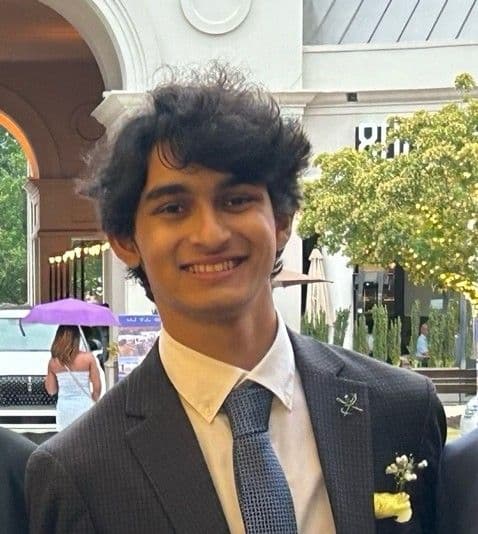
What does it actually take to stand out in college applications today? Not just good grades and test scores, but the kind of profile that makes an admissions committee remember your name?
We sat down with Tanish Pai, a Flintolabs alumnus who was just admitted to the University of North Carolina at Chapel Hill, one of the top five public universities in the country, to find out. What he shared was honest, specific, and more useful than anything you'll find in a YouTube college prep video.
Here are the three things that made the biggest difference for him.
1. Professional mentors carry real weight
Tanish listed Flintolabs as his number one extracurricular on his Common App. Not because he was told to, but because it genuinely was.
"For me, Flintolabs was at number one, because obviously it was the economic kind of aspect of the research, and then working with professionals in the field," he said. "I've been able to take some of the connections from Flintolabs and reach out to certain people and say, hey, this is what I've done, do you have any advice for me going forward?"
That access matters. Working alongside professionals, getting feedback from people who are actually in your field of interest, and being able to name those relationships in your application tells admissions readers something a club membership or honor roll listing cannot: that you took initiative, found your people, and operated in a real professional environment while still in high school.
Connections you build while doing real work carry a different kind of weight than the ones that come from just showing up.
2. Building with AI beats just using it
Ask most high schoolers about their AI experience and you'll hear: "I use ChatGPT." That answer no longer differentiates anyone.
Tanish put it plainly: "People will say, oh, I worked with ChatGPT because I used it, and Claude AI because I used it. But being able to see the faces of it, going deeper into blockchain, and being able to pave my path in that way, it just let me explore more."
At Flintolabs, students do not just generate text. They build apps. They work with concepts like computer vision, augmented reality, and natural language processing, and they apply them to projects they actually care about. That hands-on building is what turns a tool into a skill, and a skill into a story worth telling.
When Tanish sat down to write his essays and fill out his activities list, he had something concrete to point to: not a certificate of completion, but projects he had shipped, problems he had wrestled with, and a genuine perspective on where technology is going.
3. The internship was different because it asked him to figure things out
Traditional internships hand you a task, assign you a supervisor, and tell you what done looks like. Tanish's experience at Flintolabs was different, and he thinks that difference is exactly what stood out.
"Having the creative exploration that comes with Flintolabs is something that I would advise for any intern in the future," he said. "We all had the freedom to look towards making whatever we wanted to make. It allowed us to just explore, and that helps more than just the average internship, where you're pretty much just saying, hey, this is the person you work under, you have to help with this."
That autonomy is not just more interesting. It produces a better story. When you have to figure things out on your own, make decisions without a script, and navigate ambiguity in a professional environment, you learn something that cannot be taught in a classroom: how to function when nobody is telling you what to do next.
That is a very different signal to send to a college admissions office than "I completed my assigned tasks."
A conversation with Tanish
Flintolabs: When you look back, what would you tell current students about timing their college prep?
Tanish: Take your SATs and ACTs early. I finished mine before senior year started, which meant I could actually focus on applications and essays when everyone else was still cramming for tests. Some of my friends were doing both at the same time and it was really stressful. Sort out your GPA early too, because that foundation lets you spend your senior year telling your story instead of still building your resume.
Flintolabs: How did you build your college list?
Tanish: I made it around my major. I knew I was interested in economics and finance, so I looked for schools with strong programs in that, good faculty, and real internship access. Chapel Hill actually has an internship fair where companies come on campus specifically to recruit sophomores, juniors, and seniors. That sealed it for me. The Flintolabs motto that the internship scene is changing, that you need prior experience before you even get to college, that was in my head when I was evaluating schools.
Flintolabs: What made Flintolabs the top activity on your Common App?
Tanish: It wasn't just AI, it was the research, the professionals I got to work with, and the fact that I could explore. It was an experience I could actually talk about. It helped me understand economics at a deeper level, because I was applying it, not just reading about it. I came out of it saying, this is something I can genuinely put toward my college applications, and mean it.
Flintolabs: Any advice for students a year or two behind you?
Tanish: Be intentional early. Know what you're interested in and find programs and experiences that match that, not just ones that look good on paper. And when you write your essays, make a story for yourself instead of copying what you see online. There is no specific thing that works for everybody.
What this means for students now
Tanish's path is not a formula, but it is a model. Get your fundamentals done early. Find programs where you do real work alongside real professionals. Build things, not just knowledge. And when it comes time to write your story, make sure you actually have one.
The college application process rewards students who can show, not just tell. Building purposeful apps with AI while working with professional mentors, in an environment that asked him to figure things out on his own, is exactly how Tanish built a story worth telling.
He is heading to Chapel Hill in the fall. Congratulations Tanish! We could not be prouder. We cannot wait to see the amazing things you'll do!
Comments (0)
No comments yet. Be the first to share your thoughts!